Falcon raises EUR 1.5 million to bury the billable hour and build Europe's first AI-native law firm
Ghent, 1 October 2026. Founded notably by the team behind Mbrella (acquired by D'Ieteren), Falcon delivers same-day, flat-fee commercial legal work through an AI platform with a qualified lawyer signing off on every review. The company already counts Loop Earplugs among its paying customers and is targeting EUR 1 million in annual recurring revenue within its first year.
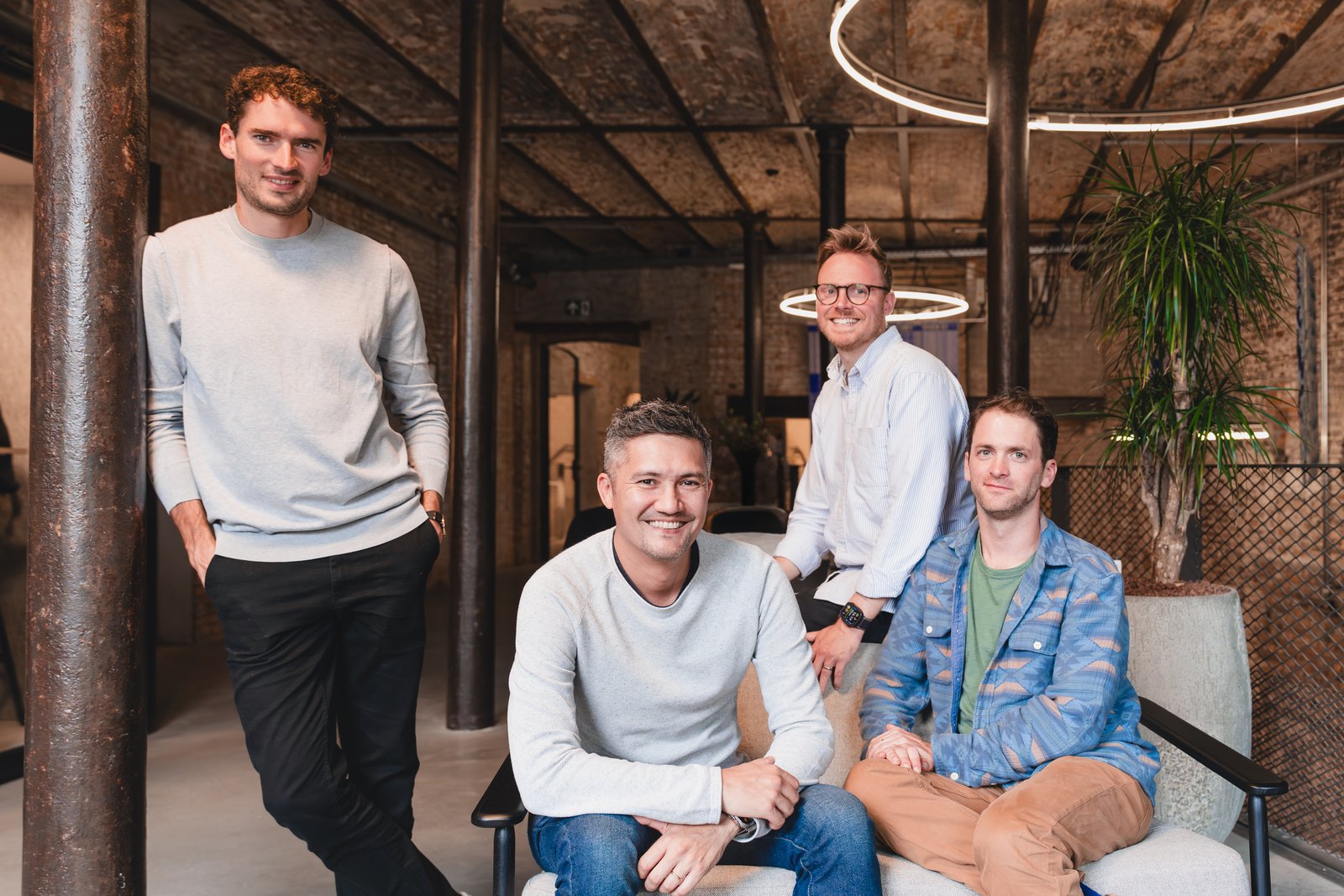
Falcon, a new AI-native law firm, announced today it has raised EUR 1.5 million in pre-seed funding, one of the largest pre-seed rounds closed by a Belgian legal-tech startup to date. The round was led by Syndicate One, with participation from Stelena Capital, Greenpark Investment Partners, RDY Ventures and France's Source Ventures. Falcon launches with Wim Dejonghe, former global senior partner of Allen & Overy (now A&O Shearman), as founding advisor.
Falcon is built to solve a problem its four founders, Quinten Vandermeulen, David Nguyen, Amaury Gérard and Rémy Bonnaffé, lived first-hand. Amaury, David, and Quinten spent six years building Mbrella, which they sold to D'Ieteren at the end of last year. As Mbrella scaled and started closing larger contracts, every deal turned into a slow, drawn-out negotiation over paperwork none of them had the time, patience or legal training to handle properly. Hiring an in-house legal team was hardly an attractive alternative for a scale-up trying to stay lean.
“We got tired of paying four thousand euros to wait three weeks for a contract we needed signed on Friday. So we built the law firm we wished existed when we were running Mbrella.”
To build it properly, the founders brought in Rémy Bonnaffé, a former Freshfields lawyer who had already started his own legal consulting practice and understood exactly why traditional firms could not fix the problem from the inside.
“The billable hour is not just how law firms invoice; it is how they are built. Promotions, bonuses, hiring, even the software firms run on, all of it is calibrated to counting hours. You cannot ask a partner to make the work ten times faster without asking them to shrink their own business. That is why the change has to come from outside the profession.”
That view is backed by Wim Dejonghe, who joins Falcon as founding advisor. “AI creates an opportunity to rethink not only how legal work is done, but how legal services are delivered and priced. Falcon is building that model from the ground up.”
How it works
Falcon starts every client relationship with a 45-minute intake call to understand how the company does business and what its risk appetite looks like. That conversation becomes the client's legal “playbook,” the set of rules that guides every review Falcon does for them afterwards.
From there, the workflow is deliberately simple: a client drops a contract into a chat application such as Slack or Microsoft Teams. Falcon's AI reviews it against the client's own playbook, not a generic checklist, and produces a plain-language summary with flagged risks and proposed redlines, every edit traceable back to a reason. A named, qualified lawyer then reviews and signs off before anything goes back to the client, the same day.
Law firm from founders for founders
“We are not a co-pilot that helps a lawyer go faster. We are an autopilot that feels like an extra legal colleague in your team. The work comes off the customer's desk entirely, and a real lawyer's name is attached to every single outcome.”
The launch focuses on the highest-volume, highest-friction category of legal work: commercial contracts, including NDAs, DPAs, MSAs, and customer and vendor agreements. Falcon prices the service as a flat monthly membership rather than by the hour, with three published plans starting at EUR 1,000 a month for up to six reviews and rising to EUR 5,000 a month for high-volume teams, with no overage fees.
Beta's over, Falcon is ready to fly
Loop Earplugs, one of Belgium's fastest-growing consumer brands, moved from an early test phase into a paying Falcon contract. “Price was never really the deciding factor for us. Speed is. A contract that sits in someone's inbox for two weeks is a deal that is not moving,” says Dimitri O, co-founder of Loop Earplugs.
Falcon prices against two existing options: in-house counsel, which typically runs EUR 100,000 a year fully loaded, or fractional legal counsel, which quickly reaches EUR 5,000 a month for a fraction of the coverage.
Growth ambition
Falcon is targeting EUR 1 million in annual recurring revenue within its first year of operation. Longer term, the founders describe an ambition to become the first AI-native services unicorn in Europe, built around what they call “a single platform managing a growing company's legal needs end to end, the way Revolut redefined what a bank could look like.”
“Law firms in ten years will not look like law firms today. They will look like product companies, the same way Revolut does not look like a bank.”
A market that has gone unserved
Falcon estimates the newly reachable European market, small and medium-sized companies that traditional law firms have effectively priced out, at EUR 49 billion a year, built from Eurostat and UK government business-population data. Traditional firms serve roughly 50,000 large European enterprises with the budgets to sustain hourly billing, while more than 32 million European SMEs and startups operate outside that traditional model. Falcon argues that a large part of this market is not merely underserved, but effectively unserved by the traditional model.